Treasures
AI and Automation: A Reflection on the Future of Work
Alex de Pablos Lopez7 min
Artificial Intelligence (AI) and Automation are changing the way we work. But is it really different from the waves of automation over the past 200 years? In my opinion, I think we are on the threshold of a revolution that could be as significant as the Industrial Revolution.
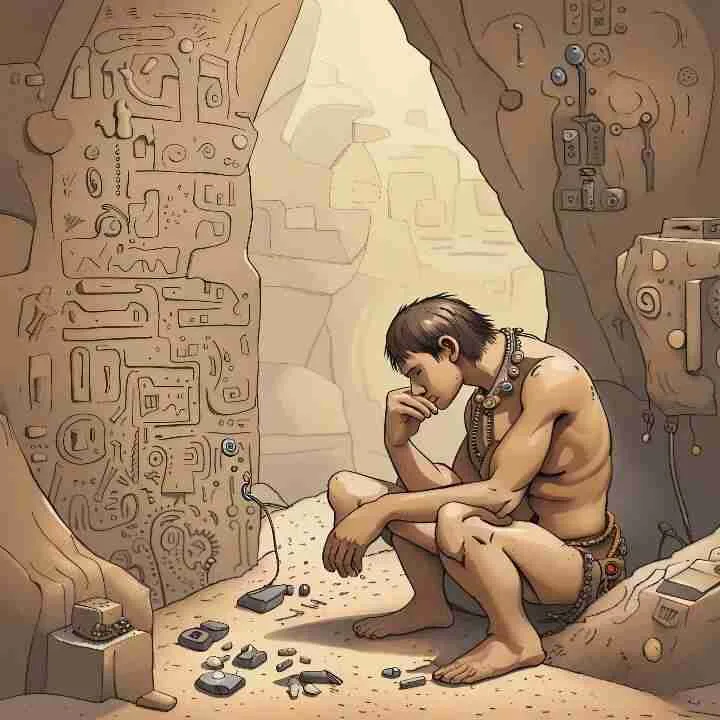
Advancements in AI are changing the way we interact with technology. We are no longer limited to interacting with machines through coded commands. With generative AI, we can interact with them in the same way we do with those around us: through natural language. This opens up new possibilities for how we can use technology to improve our lives… and our work.
ChatGPT and generative AI are a generational change in what we can do with software and what we can automate with it. But what does this mean for the future of work? According to a PwC study, AI could contribute up to $15.7 trillion to the global economy by 2030. But what kind of jobs will be created and which ones will be lost in the process?
History shows us that every time we go through a wave of automation, entire classes of jobs disappear, but new ones are also created. In the long run, the total number of jobs does not decrease and we all become more prosperous.
It’s important to look back and remember that automation is not something new. From the invention of the wheel to the creation of the assembly line, humanity has always sought ways to make work more efficient. But what is unique about this wave of automation is the speed at which it is happening. Thanks to advances in AI and computing, we are seeing changes that used to take decades or even centuries happening in a matter of years.
We have gone from automating legs, then arms, then fingers, and now brains. We went from agricultural work to blue-collar work to white-collar work, and now we will automate white-collar work as well. And then what? I believe the answer to this question is that we will create new types of jobs that we cannot yet imagine.
In fact, have you ever wondered… what does it really mean to “automate the brain”? In many ways, it is a natural extension of what we have been doing for centuries: using tools to amplify our capabilities. But instead of amplifying our physical strength, as we did with the invention of tools like the hammer or the wheel, we are now amplifying our mental capacity. With AI, we can process and analyze information on a scale that simply would not be possible for a human.
The Jevons Paradox, an economic concept, tells us that as technologies become more efficient, we do not necessarily use them less. In fact, we often end up using more of these technologies. This is because the improvement in efficiency reduces the relative cost of using the technology, which can increase the demand for it. In the context of AI and automation, this means that although these technologies make certain tasks more efficient, we will not necessarily need fewer people to perform these tasks. In fact, we might end up doing more of these tasks because AI and automation make them more accessible and less costly. Instead of replacing humans, I believe that AI and automation will free us from monotonous and routine tasks, allowing us to focus on work that is more enriching and satisfying.
This topic is particularly relevant when we talk about our daily work. It’s easy to fall into the thinking of ‘AI is going to take all our jobs’. It’s normal to feel a bit of fear in the face of something that is already so big and only going to grow more. But the truth is that, although automation makes some tasks more efficient, that doesn’t mean we’re going to need fewer people. What’s going to happen is that we’re going to find new ways of working and doing more things. Probably, few jobs in the future will be exactly as they are today. We’re all going to have to learn new things and adapt to change. Imagine, for example, someone who used to spend all day entering data into a spreadsheet. Now, thanks to automation, that person could spend more time analyzing that data and making decisions based on it. This could lead us to a future of work that is more rewarding and meaningful.
But surely you’re wondering: what if this time it’s different? What if this wave of automation is the one that finally leaves us jobless? Well, the truth is that nobody has all the answers right now, but I, in addition to giving you the cliché of ‘only time will tell’, will leave you with my opinion on the matter. I think it’s unlikely. Although AI and automation will certainly displace some jobs, they will also create new ones. And I’m not just talking about super technical and specialized jobs. AI is also creating opportunities in areas such as customer service, sales, and marketing, where it’s important to understand and respond to human emotions.
However, the transition to a more automated economy will not be without challenges. As Laura D. Tyson (opens in a new tab) and John Zysman (opens in a new tab) point out in their article “Automation, AI & Work (opens in a new tab)“, AI will likely intensify the adverse effects of automation on work, including job polarization, wage growth stagnation for middle and low-skilled workers, and growing inequality.
To mitigate these effects, we will need smart policies that not only foster innovation and growth, but also ensure that the benefits of AI and automation are widely shared. This could include policies that promote training and continuing education, so that workers can acquire the skills needed for the jobs of the future. It could also include policies that strengthen social security and provide a safety net for those who are displaced by automation.
We have a responsibility to ensure that the transition to a more automated economy is fair and equitable. This means that we must be willing to invest in education and training, and to adapt our policies and our institutions to the new realities of work.
In conclusion, AI and automation are changing the way we work, but not necessarily in the ways that some might expect. Instead of leading to the end of work, they could lead to a reinvention of work, where humans and machines work together in new and creative ways. But to get there, we will need smart policies to help us navigate the challenges of the transition and to ensure that the benefits of AI and automation are widely shared.
For me, leveraging the potential of AI and automation means using these technologies to make our work not only more efficient, but also more meaningful. It means using AI to free us from repetitive and mundane tasks, so that we can focus on the work that really matters. It means using automation to amplify our skills, not to replace us.
The truth is, I’m quite excited about what the future holds. I believe that AI and automation have the potential to make our lives and our work simply better. But I also believe that we need to be careful, because they also have the potential to create disruption and inequality. Our task is to ensure that we harness the potential of AI and automation, while mitigating their risks. With the right policies and investments, I believe we can do it.
We must recognize that these technologies are ‘just’ tools. They are incredibly powerful, but at the end of the day, they are just that: tools. It’s up to us how we use them. We can use them to create a future of work that is more equitable and rewarding, or we can use them to create a future of work that is more unequal and alienating. The choice is ours.
If you liked this article and want to continue exploring these topics, I invite you to keep reading on my blog. I have a series of articles on Technology and Software Engineering that might interest you. And if you like these more reflective articles, you’ll be glad to know that I plan to incorporate more of them in the future. So, stay tuned!